
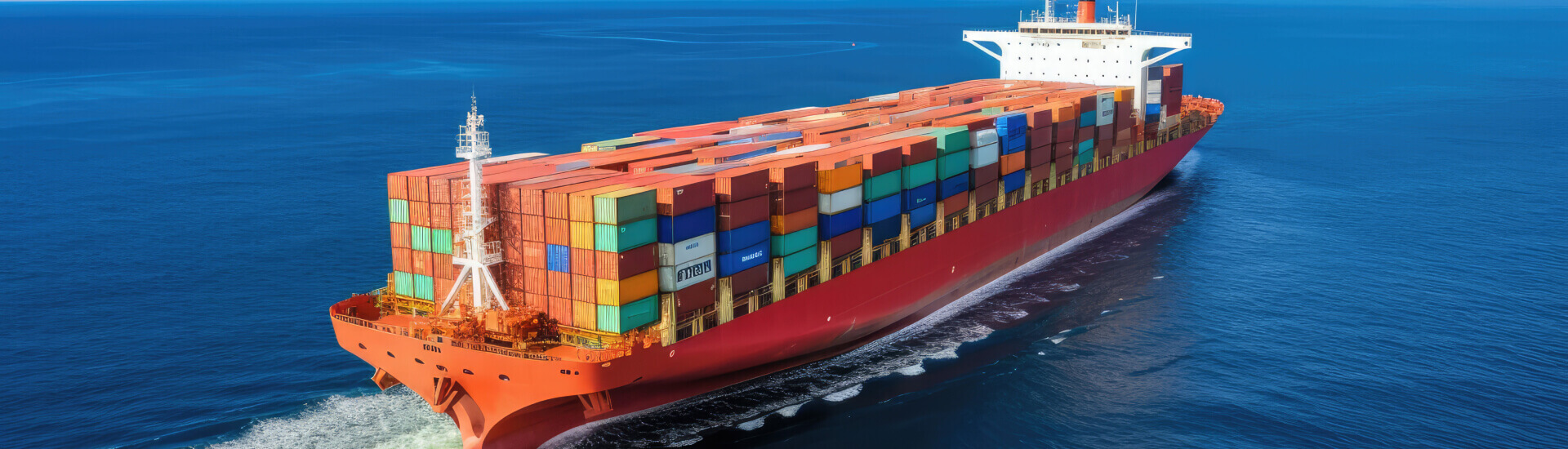
From freight forwarding to customs clearance, OneTrack delivers end-to-end logistics services that connect your business to the world — with precision, speed, and reliability at every step.
Our freight forwarding services ensure that goods reach their destination on the agreed date and in excellent condition.
The service uses established relationships with multiple carriers including trucking companies, rail freight operators, and ocean shipping lines.
Our team negotiates the best possible shipping rates and selects routes that balance speed, cost, and reliability.
Door-to-door shipment is typically a complex, multi-step process. However, our approach ensures that customers do not need to manage each stage individually.
Customers simply specify the destination while we manage the entire logistics chain.
Our integrated shipping services include freight acceptance, loading, consolidation, warehousing, insurance, customs clearance, and final delivery.
We ensure reliable and fast shipment to any destination.
Oversized and out-of-gauge cargo requires specialized logistics planning and handling.
Our dedicated team manages the transportation of large and heavy cargo with careful planning and execution.
From project equipment to specialized machinery, we provide worldwide shipping solutions at competitive prices.
We provide efficient customs clearance services for both air and sea cargo.
Our experienced team has successfully completed advanced customs examinations and is supported by trained logistics professionals.
This service ensures reliable cargo clearance across multiple ports and locations.
Additionally, we assist customers with EXIM regulations, tariff compliance, and duty drawback benefits.
Our deep understanding of specialized trucking and logistics capabilities allows us to safely transport cargo across domestic locations.
We handle oversized and out-of-gauge shipments including heavy industrial equipment, boilers, construction machinery, storage tanks, and containers.
Our logistics planning ensures cargo is transported efficiently and safely from origin to destination.

In December 2008, the International Chamber of Shipping (ICS) and the World Shipping Council (WSC), published ‘Safe Transport of Containers by Sea: Guidelines on Industry Best Practices’.
The Guidelines have been produced to minimise the dangers to containerships, their crews, and all personnel involved with containers throughout the transport chain, and were developed by an expert industry working group, meeting in London and Washington DC during 2008. The Guidelines have now been presented to governments at IMO where they have been well received. Encouragingly, the Guidelines have also attracted a positive response from shippers’ organisations who, under the umbrella of the Global Shippers Forum (GSF), have lent their support to this brochure. The primary responsibility for the safe transport of containers by sea rests with containership operators. However, there are many other parties in the transport chain concerned with the safe movement of containers. There are those employed by shipping lines involved with the booking and assignment of cargoes, and the subsequent arrangements for stowage planning; and there are the freight forwarders, ports and terminal operators and - particularly important - the shippers, from whom the cargo originates. All of these players have important responsibilities which are addressed by the Industry Guidelines.
Particular emphasis is given by the Guidelines to the responsibilities of those involved with the correct packing, labeling and weighing of cargoes when they are stuffed into containers, and the accurate declaration of goods by cargo interests.
All of these activities have a direct bearing on the safety of ships and the reduction of the risks to the lives of ships’ crews and other personnel in the transport chain.
The following advice is an extract from the main guidance on shippers’ responsibilities addressed in the ‘Safe Transport of Containers by Sea’ guidelines.
AA – Always Afloat: A contract term requiring that the vessel not rest on the ground. In some ports the ship is aground when approaching or at berth.
AAR: Abbreviation for:
– Against All Risks (insurance clause)
– Association of American Railroads
Abaft: A point beyond the midpoint of a ship’s length, towards the rear or stern.
Abandon: A proceeding wherein a shipper/consignee seeks authority to abandon all or parts of their cargo.
Abatement: A discount allowed for damage or overcharge in the payment of a bill.
ABI: U.S. Customs’ “Automated Broker Interface,” by which brokers file importers’ entries electronically.
Aboard: Referring to cargo being put, or laden, onto a means of conveyance.
Absorption: One carrier assumes the charges of another without any increase in charges to the shipper.
Acceptance: A time draft (or bill of exchange) that the drawee (payer) has accepted and is unconditionally obligated to pay at maturity.
Broadly speaking, any agreement to purchase goods under specified terms.
Accessorial Charges: Charges applied to the base tariff rate or contract rate such as bunkers, container, currency, or delivery charges.
Acquiescence: When a bill of lading is accepted or signed by a shipper or shipper’s agent without protest, the shipper silently consents to the terms.